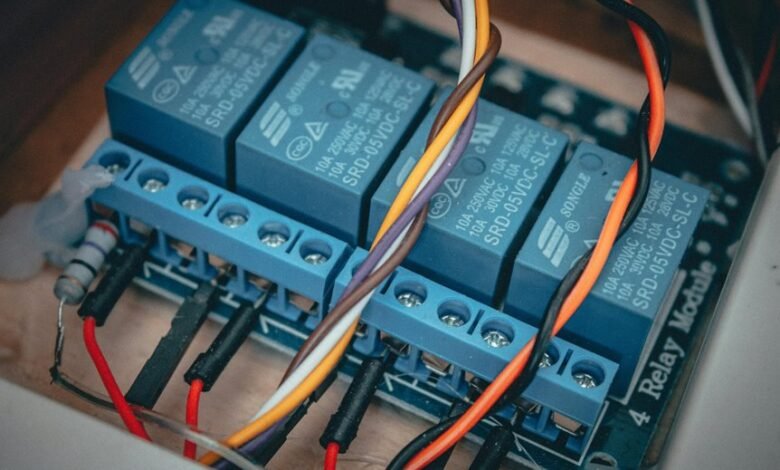
The Falcon Outreach Base 050 3174 2029 Turbo Relay Hub coordinates centralized Falcon network control with real-time dataflow principles to optimize speed, bandwidth, and reliability at dense street-level relays. It handles protocol translation, timing synchronization, and adaptive routing to support disaster response and education outreach with accessibility and transparency. The system balances latency targets with scalable resources, aiming for measurable community impact while integrating local expertise. The full implications and tradeoffs merit closer examination.
How the Falcon Relay Hub Works: Architecture and Data Flow
The Falcon Relay Hub functions as the central processing node for the Falcon network, coordinating message routing, protocol translation, and timing synchronization across connected subsystems. It embodies architecture dataflow principles, enabling real time systems to balance speed bandwidth with reliability.
The design supports disaster response, education outreach, and human centered programs within a dense network while addressing network challenges and sustaining relay. Falcon relay.
Real-Time Turbo Systems: Speed, Bandwidth, and Reliability
Real-Time Turbo Systems optimize the interplay between speed, bandwidth, and reliability to meet stringent latency requirements. They emphasize measurable speed metrics and robust fault tolerance, ensuring predictable performance under varying loads.
Bandwidth optimization strategies balance data flow, reducing contention and jitter.
System reliability derives from redundancy, error correction, and proactive monitoring, preserving throughput and quality of service across dynamic network conditions.
Human-Centered Programs: From Disaster Response to Education Outreach
Human-centered programs in disaster response and education outreach are structured to align operational capacity with community needs, prioritizing accessibility, inclusivity, and measurable impact.
They emphasize ethical coordination, transparent evaluation, and耐able scalability.
By integrating local expertise with external resources, these initiatives seek durable benefits, reduce inequities, and foster trust.
Core objectives include rapid response, capacity building, and sustained education outreach outcomes for diverse populations, environments, and contexts.
Sustaining a Dense Relay Network: Challenges and Solutions
Sustaining a Dense Relay Network: Challenges and Solutions examines how high-density relay architectures maintain performance amid dynamic demand, limited resources, and environmental variability. The analysis focuses on robust topology, adaptive routing, and clinically precise measurements of latency and reliability. It investigates dense network resilience through scalable resource allocation, prioritizing critical links while balancing throughput, energy use, and fault tolerance without sacrificing operational freedom.
Conclusion
The Falcon Relay Hub demonstrates a precise orchestration of centralized control and distributed data flow, delivering low-latency, scalable connectivity for dense urban networks. Real-time prioritization and adaptive routing sustain reliability across diverse contexts, from disaster response to education outreach. While technical prowess underpins performance, the human-centered emphasis remains paramount—systems serve people, not just packets. In this balance, the hub acts as a bridge, like a compass in a storm, guiding communities toward resilient, informed futures.